
Industry & Councils · Auckland
You do the tree work.
We’ll help with the timber.
A timber-recovery partner for arborists, tree companies and the people managing Auckland’s trees and land.
You keep the tree job and your customer relationship. We work alongside your crew to assess useful logs and find a practical pathway to recovery, milling and reuse.
Before you make the first cross-cut.
Recognise the good ones
A small part of the log pile. A different possibility.
Tree work produces large volumes of woody material. Most is appropriately processed as mulch or firewood. A small proportion contains good-quality timber that could have a higher-value use.
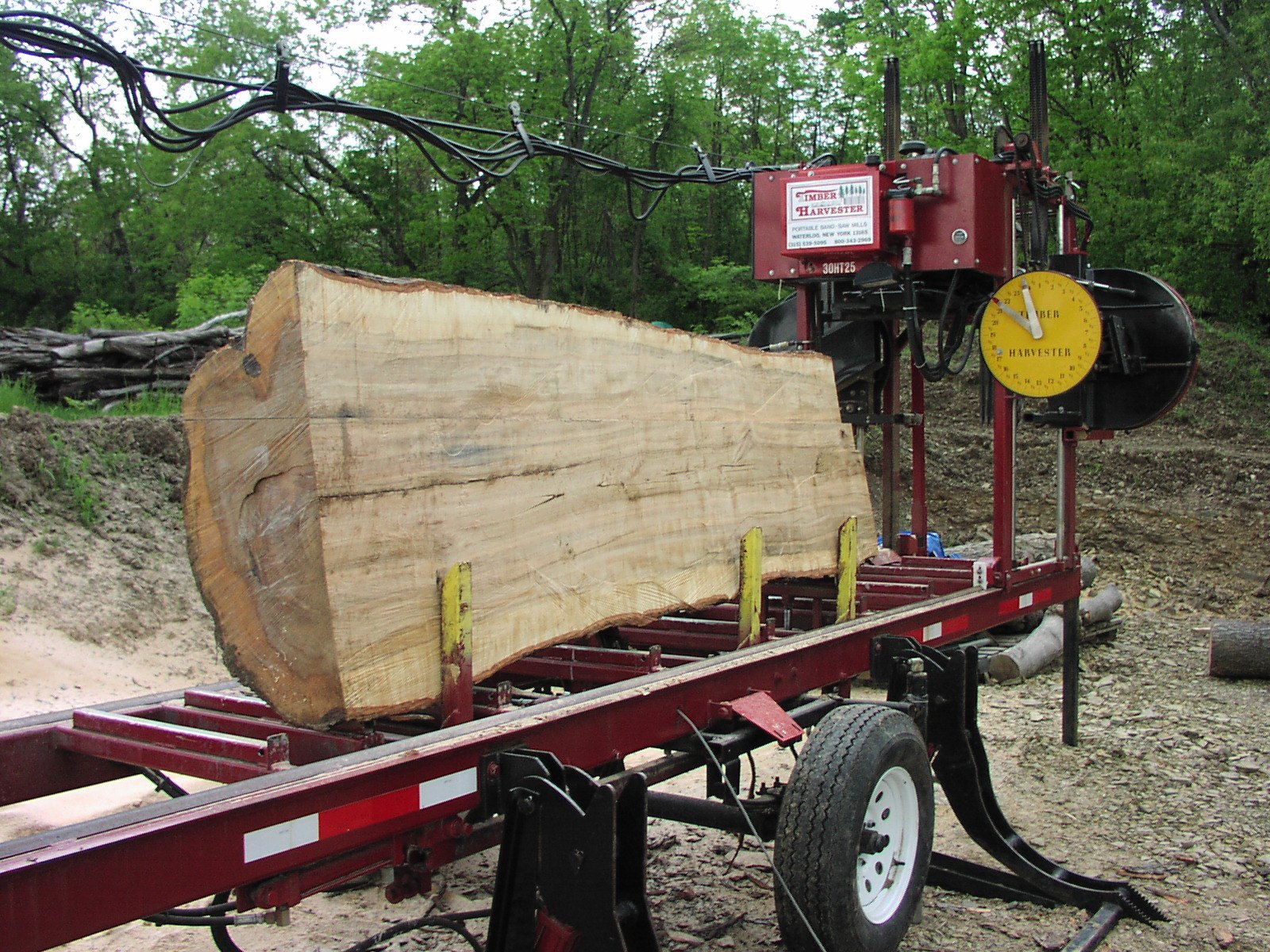
Canopy Solutions Auckland combines ecological arboriculture, urban timber recovery and mobile sawmilling. We help identify those logs before they are cut too short, chipped or processed as firewood.
We don’t need to mill every log. We need to recognise the good ones before they disappear.
For arborists & tree companies
An answer when your customer asks, “Could we use the wood?”
Send a few photos, the species if known, approximate diameter and usable length, suburb and timing. We can help assess whether recovery is worth exploring and advise on useful lengths before the stem is cross-cut.
Short firewood or transport lengths can remove much of a log’s milling value. An early conversation gives you more options.
SEND US A LOGYour customer. Your tree work.
Our role is to help with the timber. You retain your existing customer relationship and control of the tree job.
- Offer customers a timber-recovery option
- Potentially reduce unnecessary disposal or processing
- Access milling without owning a sawmill
- Create a better outcome for exceptional logs
- Have somewhere to send unusual or valuable stems
What is worth a look?
Not every log is a milling log.
Macrocarpa, oak, blackwood, elm, cedar, walnut, fruitwoods, unusual hardwoods and other large or interesting stems may be worth assessing.
Species alone is not enough. Suitability depends on diameter, straight usable length, defects, decay, branching, embedded metal risk, access, handling requirements and a realistic end use.
Recovery and transport have costs. A useful log does not automatically have a sale value, and an assessment is not an offer to buy or collect it.
Trees, land and timber
Ecological value and timber value are different questions.
An invasive or undesirable tree may need to be removed to support native regeneration or eliminate a major seed source. It may still contain useful timber.
For ecological restoration contractors, we can assess whether logs from mature trees are worth recovering. Where practical, selected material can be reused instead of automatically becoming firewood or mulch.
The ecological objective remains the priority. Timber recovery fits around the restoration work.
Our ecological approachCouncils, contractors & land managers
A resource-recovery partner for your tree programme.
Planned removals, storm damage, infrastructure projects, parks management, vegetation management, ecological restoration, development and asset maintenance all generate logs.
Most material can continue through normal mulch, firewood or waste streams. We can help identify the relatively small proportion worth separating, with an approach that complements existing arboricultural operations.
- 01Retain→
- 02Remove→
- 03Assess→
- 04Recover→
- 05Reuse→
- 06Process remaining material normally
Retain trees where appropriate. Where removal is required, assess selected logs for recovery and reuse, then process the remaining material through normal channels.
A possible Auckland timber story
FROM STREET TREE
TO PARK BENCH.
Useful timber can come back to the community it grew in.
Suitable trees removed from streets, parks, reserves and other public land could return as places to sit, gather, learn and spend time outdoors.
Each opportunity depends on timber quality, drying, design requirements and a practical project to use it.
Local source. Recorded journey. A useful next chapter.
Work with the team you already have
Practical and proportionate.
Councils and organisations do not need to replace their existing arboricultural contractors to explore timber recovery. We can work alongside them.
Support might be as simple as assessing photos of an unusual log, or a more regular arrangement for selected material. The aim is to make good decisions without complicating routine tree work.
Discuss a recovery partnership- Simple log-selection criteria for crews
- Advice on useful species and recoverable lengths
- Arranging periodic collection or milling
- Milling selected logs
- Tracking recovered timber
- Finding potential end uses
- Documenting recovery outcomes
Provenance & traceability
A record from tree to final use.
We are developing a simple system for recording recovered timber. The aim is to document where material came from, what was recovered and where it went.
Measured timber yield and recorded end uses give a clearer account of resource recovery than broad sustainability claims.
Proposed recovery record
- Identity
- Unique stock or project number
- Origin
- Species, source location and reason for removal
- Recovery
- Recovery date and milling date
- Material
- Timber yield and drying status
- Outcome
- Final use

Designers, builders & makers
Help give local timber its next use.
We are developing a changing supply of locally recovered Auckland timber for architects, builders, furniture makers, boatbuilders, designers and craftspeople.
Tell us your preferred species, dimensions, quantity, drying needs and intended use. Knowing what people can use helps connect suitable logs with real projects.
Enquire about timberSEND US A LOG
Before you make the first cross-cut.
Start with a few details and photos. Approximate measurements are fine; leave anything you don’t know blank.
If the crew needs an answer soon, call Simon to discuss timing. Please don’t assume a submission confirms collection or recovery.
027 664 2307
simon@canopysolutions.co.nz
Your details and photos are used to assess and respond to your enquiry. Please upload only photos you have permission to share.